Light: Reflection

Light Reflection 

Question:
What will happen when you shine the Laser to the CD?

Hypothesis:
If we shine the laser 50 degrees on the Cd, then it will reflect 50 degrees onto the paper.

Materials:
– 1 CD
– 1 laser
– 1 protractor
– paper

Procedure:
Shine the laser at 50 degrees on the CD

Results:
what were your results?

Conclusion:
The light reflection has a relationship with the angle of incidence which is why they stay equal to one another.

Waves: Slinky- Longitudinal Wave

Waves

What are you doing?
We are observing the longitudinal waves through a slinky.

Procedure:
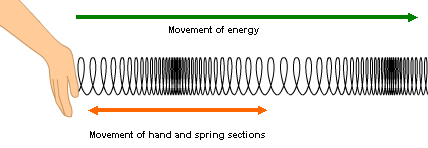
Two people held the slinky on each end so it was expanded. One person held one side still while the other person created waves. The waves traveled through the slinky and yes, they made it to the end. No, the waves did not return to me.

Did the wave “actually ” move? Did the individual coils travel to one side and back? If not, describe what happened? What went to one side and back?
Yes, the wave actually moved. The individual coils did not move side to side. The coils were being compressed and then separated from moving the wave across the slinky. The vibration of the slinky went to one side and back.

Which way was the disturbance? Which way was the energy moving? How would you compare the direction of the disturbance to the direction of energy traveled? parallel or perpendicular?
They both move side to side, so that would mean they move perpendicular to each other.

Newton’s Third Law of Motion

Newton’s Third Law of Motion 

Question:
Which balloon will travel the slowest going across the room?

Hypothesis:
If we leave a small opening, then the balloon will travel slower across the room.

Materials:
– 1 balloon
– string
– clip
– tape

Procedure:
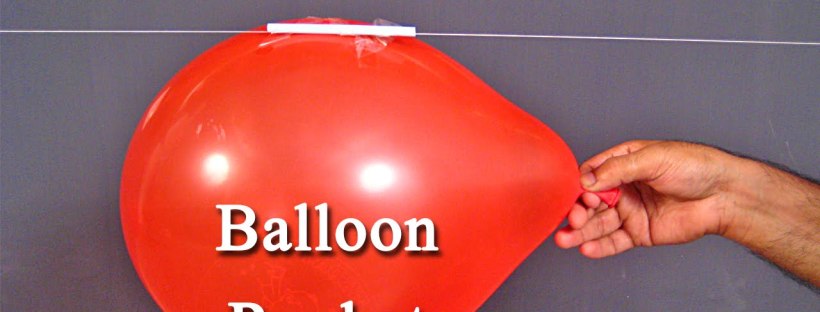
– blow up the balloon
– place the clip on the closing of the balloon
– tape the balloon onto the string
– insert the string through the straw
– leave an opening on the balloon and let the balloon travel across and time it.

Results:
What is your result?

Conclusion:
This happened because Newton’s Third Law of Motion states: for every action there’s an equal and opposite reaction. The least amount of air released resulted in the slowest balloon.

Newton’s Second Law of Motion

Newton’s First Law of Motion

Question:
what happens to the distance of the car when you add mass to it?

Hypothesis:
If we add mass to a car, then the car will loose acceleration.

Materials:
-6 pennies
– 1 HotWheel
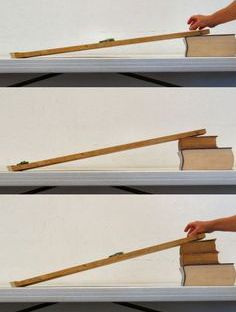
– a ramp
– a scale

Procedure:
– weighed all the pennies
-set up the ramp
– the car alone was sent down the ramp
– the car with 4 pennies was sent down the ramp
– the car with 5 pennies was sent down the ramp
– the car with 6 pennies was sent down the ramp

Results:
What are your results?

Conclusion:
According to Newton’s Second Law of Motion, A= F/M, so if you double the mass then the acceleration will be cut in half.