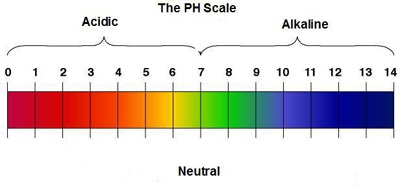
Objective: to test common household items of their acidity and alkalinity
Materials:
- Soapy water
- Soda
- Distilled water
- Baking soda
- Vinegar
- Milk
- Bleach
- Tums
Hypothesis & Procedure:
- Hypothesize pH value of the items provided
- Dip one pH strip in each of the items provided
- Match the color of the pH strip to the pH key
- Record the pH for each of them
| Item name | pH hypothesis | pH actual | Acid, Base, or Neutral |
| Soapy water | |||
| Soda | |||
| Distilled water | |||
| Baking soda | |||
| Vinegar | |||
| Milk | |||
| Bleach | |||
| Tums |
Post-Activity Questions
- What is the pH of a neutral solution?
- What is the ratio of H+ to OH- in this solution?
- Which item was the most acidic? What was its pH?
- What item was the most basic? What was its pH?
- Which item(s) was different from your hypothesis pH to the actual?
- Name some household items that are highly corrosive not tested today.
- If you accidently get an acid burn, what household item would you use to neutralize the burn?
- If you accidently get a basic burn, what household item would you use to neutralize the burn?
- If you eat a hot chile pepper, what is the best item to eat/drink to neutralize the burn?
 Fun Labs